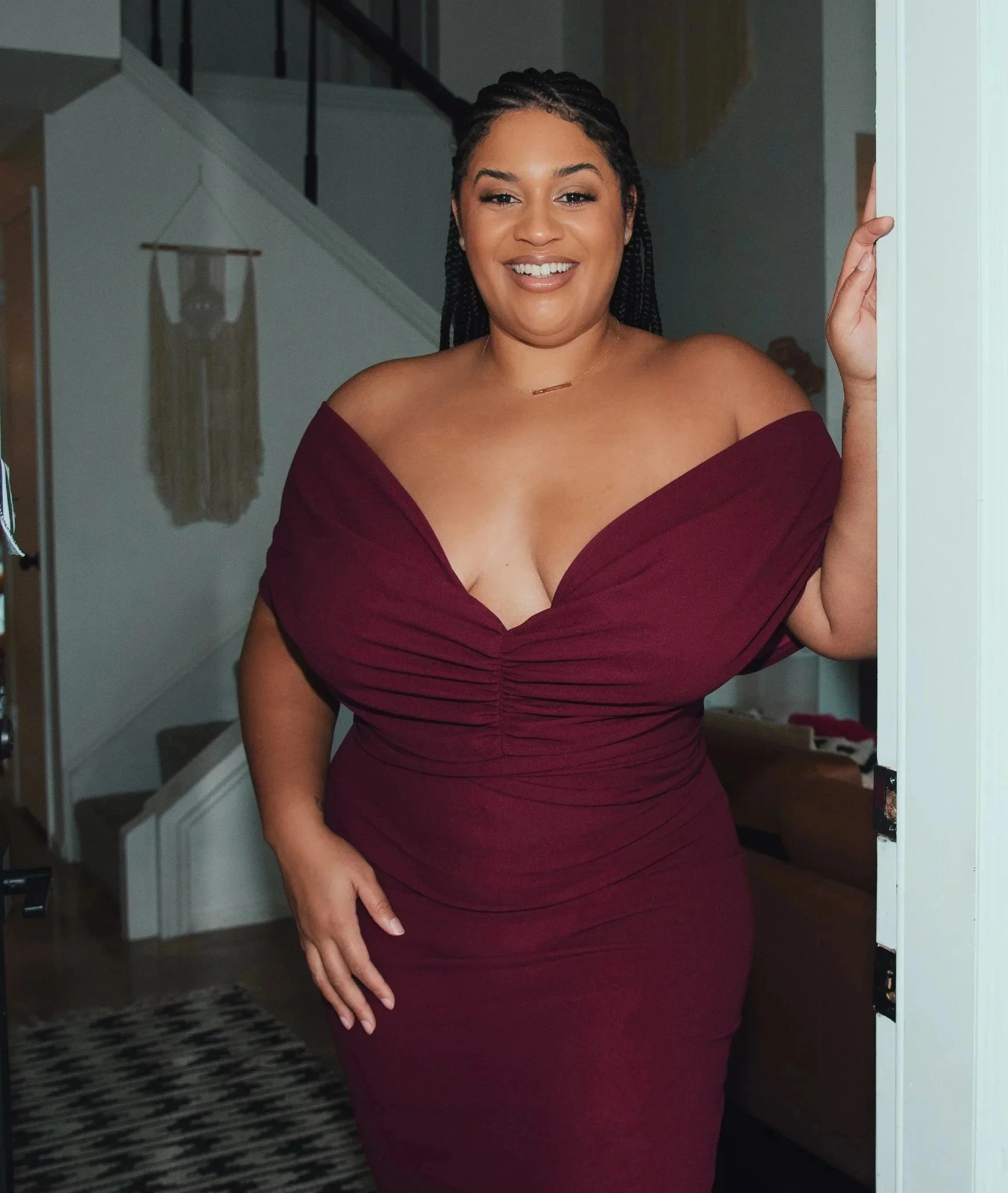
Raquel Savage not only reshapes the discourse around mental health and sexuality but also actively uplifts those often sidelined by mainstream narratives, embodying a holistic approach to healing and empowerment instead.
Six Moments That Defined Me
MY FAMILY NAME
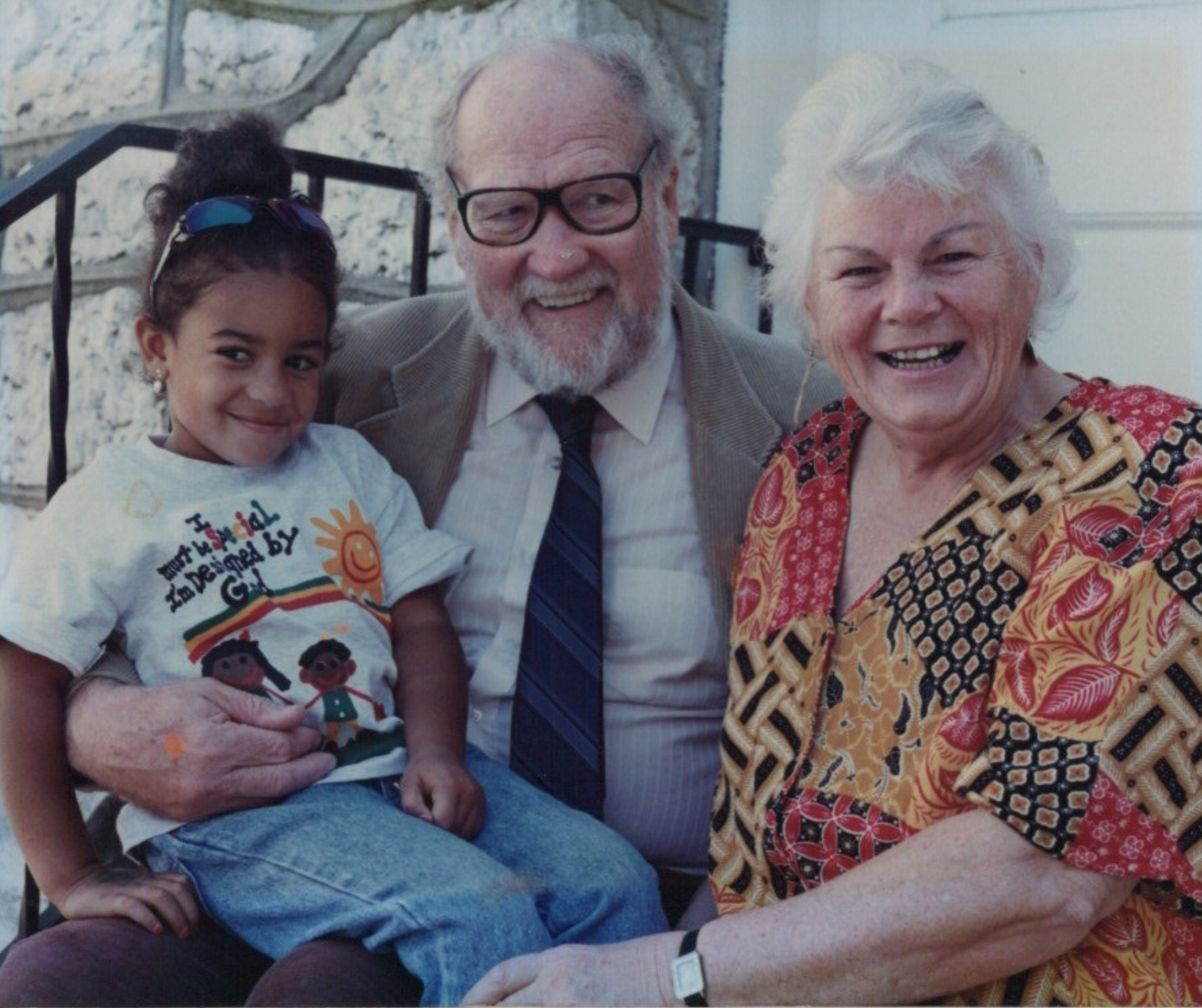
I remember standing outside the door to my grandfather’s study as a child. His space was chaotic, cozy and full of everything that shaped him; a sanctuary of knowledge and wisdom. Piles of books, old lectures and theological works cluttered the room; and it always smelled like him: woody, warm and, at times, like peanut butter, because he often topped his ice cream with it.
To me, my grandfather was a celestial being. He seemed to know everything, could do anything and his presence was magnetic. Whether he was engaging me in deep intellectual conversations or simply sitting in silence, his energy enveloped you. And his wisdom was often in the questions he asked, the curiosity he nurtured and the quiet way he held space for those around him.
Everything I am is because of him. And I'm honored to carry on his name: Zepp
He was a man of many vocations: a minister, a teacher, a writer and so much more. He spent his youth studying theology and even spent a summer exploring Christian-Marxist dialogue. As a professor of religious studies, he explored taboo topics like human sexuality, death and racism. He held a deep reverence for the culture of Islam and taught many classes to engage students in growing a similar respect. But he didn't just teach, he provoked thought and challenged students to engage with uncomfortable truths.
More than anything, my grandfather believed in the power of compassion. While I often baited him in discussions about the existence of God, he would remind me that what mattered most was not unquestioning faith but the ability to care deeply for others. For him, doing what was right wasn't just an obligation, it was his religion. It was his source of fulfillment and connection. Even in my most rebellious moments, he met me with a smile, encouraging my defiance and seeing it as a lesson for both of us.
And perhaps an even greater presence in my early life: my grandmother. Though a pastor's wife by title, she took many opportunities to stand separate from my grandfather’s legacy. She was a teacher, both in classroom and to her family, and a rebel. She was an AASECT-Certified Sexuality Educator who taught women about masturbation and pleasure (in the 1960s!) and I'll never forget stumbling across Kama Sutra books that she and my grandfather shared. She was a fire and a testament to what it meant to be a wife, mother and woman.
It was from both of my grandparents that I learned, early, to live a life of compassion, to challenge systems that hope to perpetuate violence and to fight for liberation.
1.
DISOBEDIENCE AS A BIRTHRIGHT
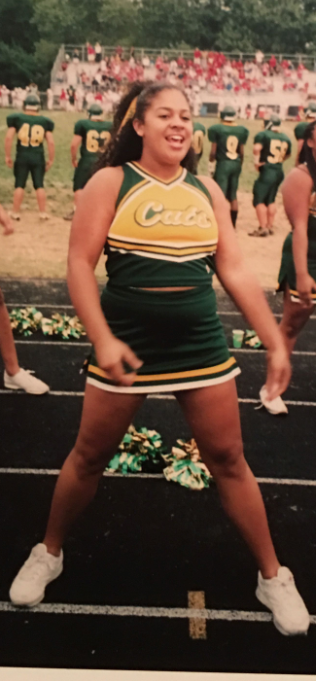
Insubordinate. Disruptive. Challenging. These were labels that followed me throughout my childhood. Teachers, administrators, etc. Everyone seemed to have an opinion about my unwillingness to conform.
At 13, I was suspended for slapping a boy who humiliated me by sitting in my lunch seat. The cafeteria was my space, a small corner of community I had created for myself, and I wasn't about to let anyone violate that. But I understood the unspoken rules: boys used power to dominate. And the school rewarded them by punishing me for standing up for myself.
At 15, I wore short-shorts that defied the regulation of “falling at your fingertips” and my AP told me I was being indecent. But I refused to apologize. And frankly, I relished in the power I had, both to make my own decisions and to have an erotic impact on others.
By 19, I was writing letters full of rage to the dean of students at my undergrad after finding the word nigger written on the elevator in my dorm. When they offered a town hall and nothing more, I demanded action. I mobilized a group of students but in return they called me antagonizing. That same year, I co-founded my college’s first queer club and organized a Queer Prom (it was so well attended the cops had to shut it down!) And later, I brought the Vagina Monologues to our campus, even though the administration refused to let me sell T-shirts that said “I <3 my vagina” calling them obscene and unnecessary. So, I sold chocolate vulva lollipops instead and we celebrated queerness, womanhood and the power of pleasure.
Disobedience has been my constant companion.
2.
AUGUST 9, 2014
On August 9th 2014, I was recovering from BBL surgery when the news of Mike Brown's murder reached me. As I lay in bed, I scrolled through my phone, watching in real time as protests erupted in Ferguson and across the country. At this point in my life, I had already developed my own political views, but the murder of Mike Brown catalyzed a deeper, more defined sense of advocacy for me.
For the first time, I saw people my age, on a mass-scale, unapologetically claiming power and refusing to be silenced. Fueled by righteous rage, they were fighting for justice in a way I had only dreamed of. This moment, this collective act of defiance, sharpened my own activism.
This was a moment of solidarity and further awakening for me. As I watched the events unfold over social media, I devoured essays written by like-minded individuals whose praxis’ inspired me. That fire of resistance, fueled by the people in Ferguson, stoked my own. One I promised myself to keep alive, not just for survival but as my birthright.
3.
GET THE MONEY UPFRONT
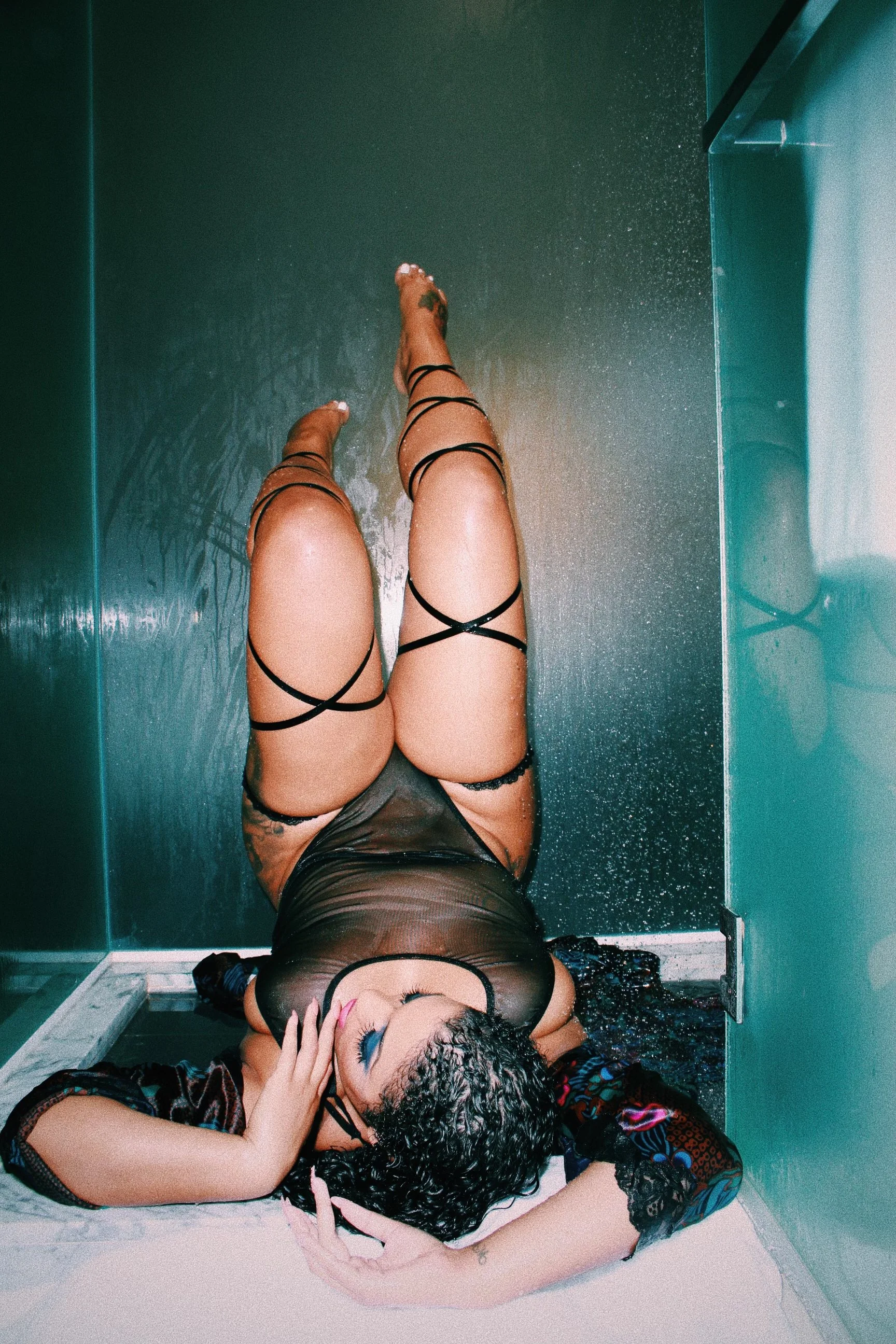
Sex has always been central to my identity, both as a topic of exploration and a vehicle for self-expression. From a young age, I was both the person others turned to for advice on sexuality and the one eager, and unashamed, to explore my own desires. For me, pleasure wasn't just a physical experience; it was an act of rebellion. I knew early on that society didn't allow girls to embrace their desires, so I made it my mission to break this rule. I proudly embrace the identity of slut.
In college, my favorite pastime was sport-fucking, constantly wanting more, more, more. I took pleasure in the power I had to seduce, to expose the hidden desires of others and to create erotic experiences people would never forget. After graduation, this truth really cemented itself. I spent a year applying for jobs (jobs that aligned with my degree, then any job at all). But no one hired me. In frustration, I asked myself, “What am I good at? What will people pay me for?” And the answer was simple: sex
In 2014, when I first exchanged sex for money, it felt like an epiphany. Why hadn't I thought of this sooner? Within months, I had packed my car and drove from Maryland to Miami, where my sex work career blossomed. I shared my experiences on Twitter -many of you know me from those feral days- drunk on yachts, shaking ass at clubs, partying in penthouses, etc. without realizing that, in tweeting, I was becoming known as that girl. That sex worker girl. “Sex worker” wasn't even on my radar (I was just selling pussy, I hadn't done any research on what to officially call it) but it quickly became part of my identity and one I've carried with me ever since.
Sex work isn't just something I do. It's part of who I am. It connects me to a vast community of people who share similar experiences and struggles and pride. It's shaped my career, my values and my understanding of power, autonomy and resistance. I will be a sex worker until the day I die (and, if you can barter sex in the afterlife, I'll carry that skill with me there, too!)
4.
ACADEMIA & THERAPISTS
Shortly after moving to Miami, I began my graduate studies in counseling with the goal of becoming a sex therapist. I quickly realized that in academic and clinical spaces, sex workers and their experiences were not welcome. In my entire graduate program, we discussed sex work only once when an anti-trafficking speaker came to our class and said, “prostitution and porn cause the [sex] trafficking of minors.” I was furious.
I knew my classmates had no real understanding of the nuances of sex work and I realized, then, that I couldn't continue in this system or call these people my colleagues. I couldn't watch while therapists remained untrained in understanding and supporting sex workers (and worse, harming them). That day, I decided to use my sex work earnings to start Zepp Wellness, a nonprofit dedicated to providing therapy and direct funding to sex workers.
Initially, Zepp was funded via my sex work income, but over time, we've expanded to be funded by sex worker-aligned granters like Third Wave or Black-led granters like B.E.A.M. Throughout the years, we've offered yoga, art classes, energy work, and much more. But our core services will always be therapy and financial support because we understand what sex workers need most: autonomy and support, not saviorism or exit plans.
This also led me to co-founding the Equitable Care Certification (ECC), a training program for clinicians to learn how to work with sex workers as therapy clients. Zepp and ECC allow me to hit my goals from all angles: through direct service with my community and via institutional change by equipping therapists with accurate and values-aligned information to become competent in serving sex worker clients.
This work is a continuation of my grandfather's legacy of service & compassion and has been one of the most fulfilling aspects of my life.
5.
COVID ISN’T OVER
When the COVID-19 lockdown began, I was on a yacht, shooting an orgy with a group of Black sex workers for Onlyfans. As we packed up, we heard the news. We were scared. Not just about the virus itself, but about the impending lockdown and how the government might use it as an excuse for increased policing.
I stayed informed, educated myself about the virus (its risks and ways to protect myself) but more than that, I realized it was a moment to deepen my political lens. As time went on, I watched as the world engaged in collective denial, governments and corporations pushing for a return to “normal” even when the pandemic was (and is) far from over.
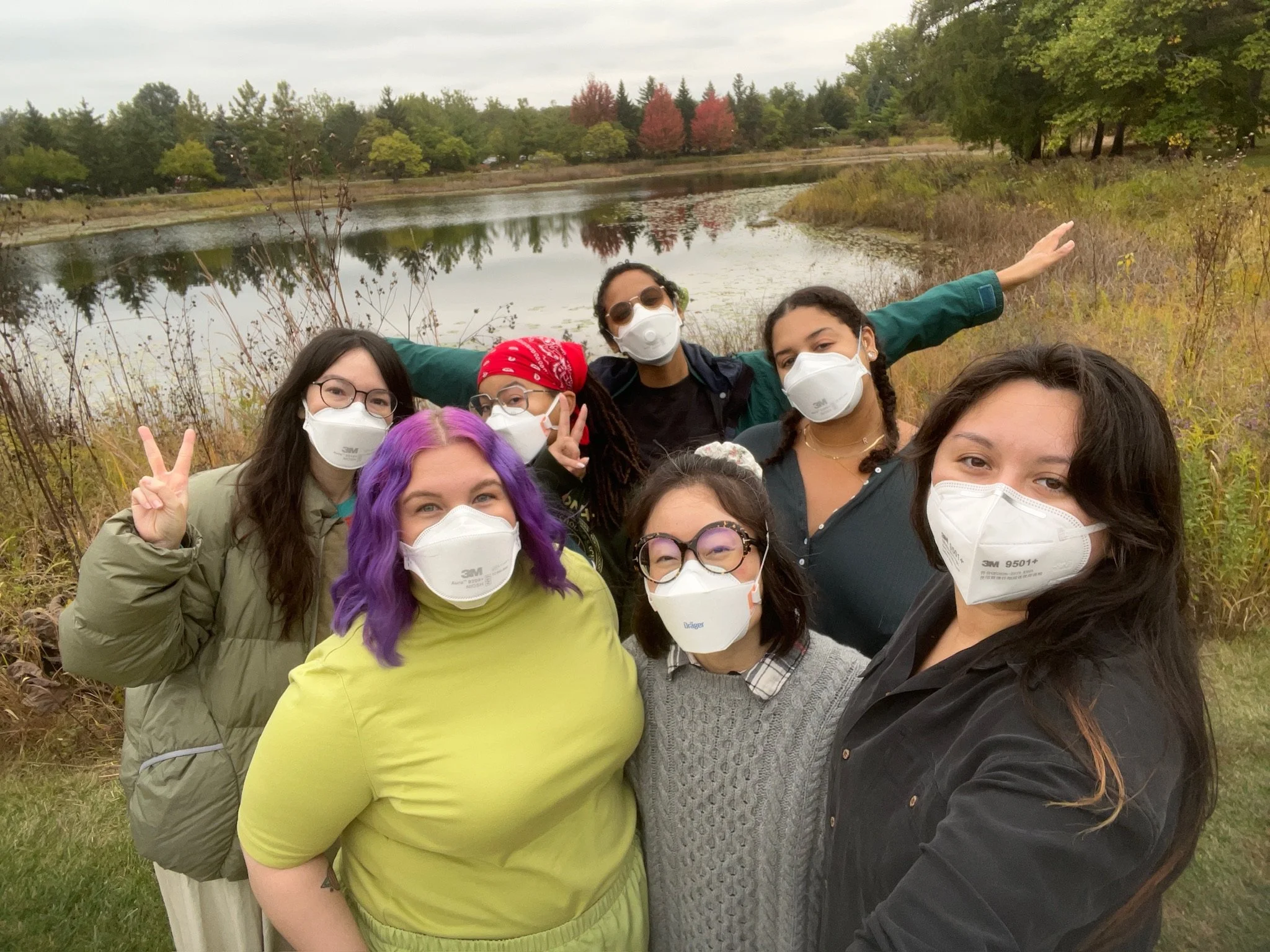
I feel a deep sense of solidarity with those who, like me, continue to take the virus seriously. The collective refusal to acknowledge the ongoing danger is jarring, and highlights how quickly people will push for their own comfort, even when it means exacerbating harm for themselves and others (and while simultaneously claiming to be community-centered). Witnessing this incongruence has strengthened my own values to do what's right, even if no one else does.
Today, as I learn to live with the pandemic, I've found a new rhythm. One where community care and mitigation aren't at odds with living. I continue to prioritize safety and responsibility, knowing that doing the hard thing (maintaining mitigation practices) is one of the most revolutionary acts I, and others, can engage in.
The pandemic hasn't ended and neither has my commitment to my values; values I've held since childhood. I know that resistance and care can persist. And that they aren't mutually exclusive with living a full, beautiful life.
6.